Share this configuration with colleagues, engineers, or contractors.
Request Drawings
Request engineering drawings for your configuration. Our team will prepare and send them within 1-2 business days.
Project Notes & Questions
YouNov 24, 2025 2:30 PM
Need to verify clearance requirements for the proposed location. Site is near property line.
SmartTank SalesNov 24, 2025 3:15 PM
NFPA 30A typically requires 5' from property lines for protected tanks. I'll include setback requirements in the site drawings.
Add Another Tank
Add additional tanks for different products or locations within this project.
Siphon Stop System
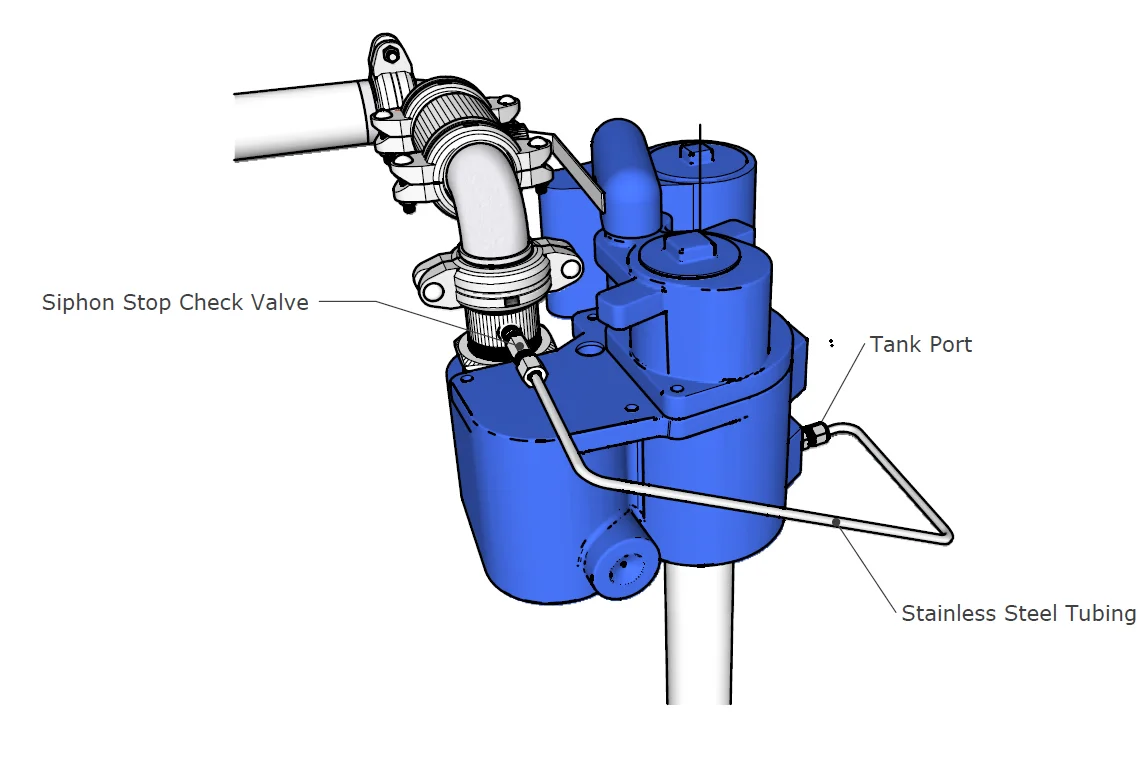
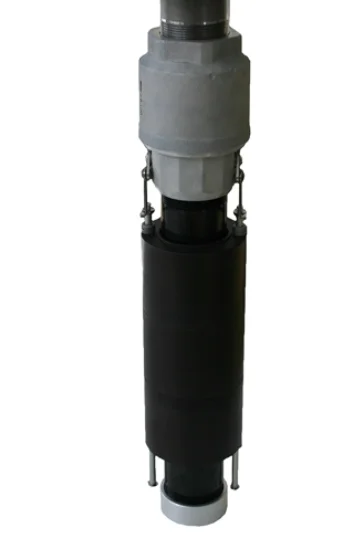
SmartTank Siphon Prevention Device
How It Works
The Siphon Stop prevents tank contents from draining through the submersible pump when the system is not in use. It uses a check valve design that breaks the vacuum and allows air entry during negative pressure conditions.
Key Features
Breaks vacuum utilizing check valve
Works with submersible pump "tank port" for air entry
Prevents tank contents from siphoning through pump
Stainless steel tubing construction
Why This Matters
Without siphon protection, a leak in discharge piping could drain the entire tank contents. The siphon stop ensures that only the fuel in the piping above the tank can escape in a leak scenario.
Low Mount Fill Container
Complete Fill System with Safety Components
How It Works
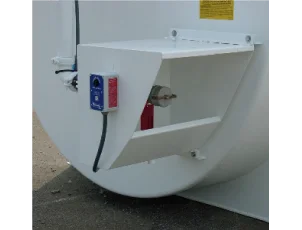
The fill container provides a secure connection point for fuel delivery trucks. Located at ground level for safe access, it includes all required safety valves and signage for code compliance.
Included Components
Cam lock fill adaptor for secure connection
Check valve to prevent backflow
Fire-rated API 607 ball valve
Locking drain valve for security
Fill port sign with code-required information
Compliance Note
Fill container signage includes tank capacity, product type, and emergency contact information as required by NFPA 30 and local fire codes.
Tank Identification Decals
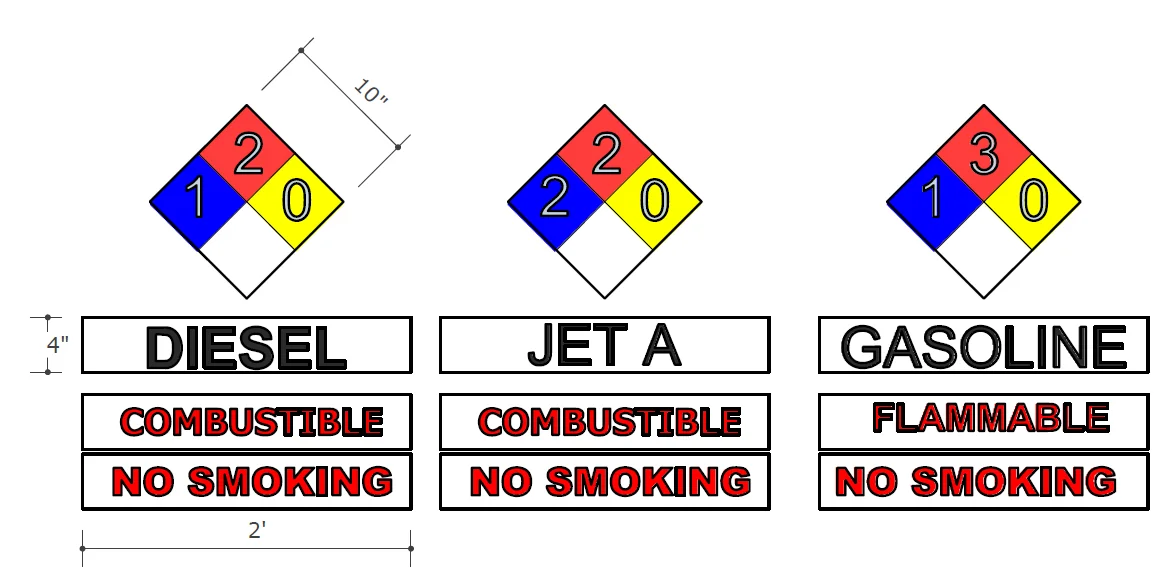
NFPA 704 Hazard Diamonds & Product Labeling
NFPA 704 Diamond
The hazard diamond communicates risks to emergency responders at a glance. Red = flammability, Blue = health hazard, Yellow = reactivity, White = special hazards. Numbers 0-4 indicate severity.
Decal Specifications
Applied to all four sides of tank
2 mil outdoor grade 3M vinyl
Permanent 3M Controltac adhesive
3 mil gloss over-lamination
5-7 year life expectancy
Compliance Note
NFPA 704 placards and product identification are required by OSHA, NFPA 30, and local fire codes. Proper labeling enables emergency responders to quickly assess hazards.
Tank Construction Comparison
UL 2085 Fireguard® vs UL 142 Flameshield®
UL 2085 Fireguard® (Protected Tank)
Lightweight thermal insulation between walls
2-hour fire rating at 2,000°F
Ballistics and vehicle impact tested
3-6" larger diameter than UL 142
~1.5 lbs per gallon heavier
Required by most jurisdictions
UL 142 Flameshield® (Secondary Containment)
Double-wall steel without insulation
Passes 2-hour fire test (non-insulated)
Emergency vents prevent failure
No documented fire failures with proper venting
$1.50-2.00/gallon less than UL 2085
Requires AHJ approval
Our Recommendation
Budget for UL 2085 unless your AHJ confirms UL 142 is acceptable. We're happy to consult with your Authority Having Jurisdiction on your behalf.
Emergency Vent
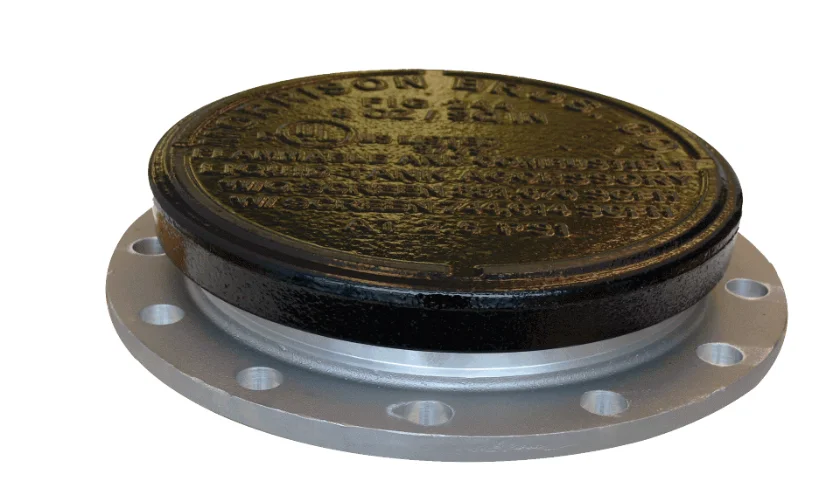
UL Listed Pressure Relief Device
How It Works
In a fire condition, pressure builds inside the tank as fuel heats and vaporizes. The emergency vent opens at a preset pressure to safely release vapors, preventing the tank from becoming over-pressurized and possibly rupturing.
Key Features
Spring-loaded design opens at preset pressure
Safely releases vapors to prevent rupture
Self-reseating after pressure normalizes
Sized to tank volume and fire exposure area
Flanged mounting for secure installation
Why This Matters
After a tank explosion in Kerrville, Texas in the 1950s, UL required emergency venting on all tanks. Since then, there has not been a documented failure of a properly-equipped UL 142 tank due to fire exposure.
Mechanical Clock Gauge
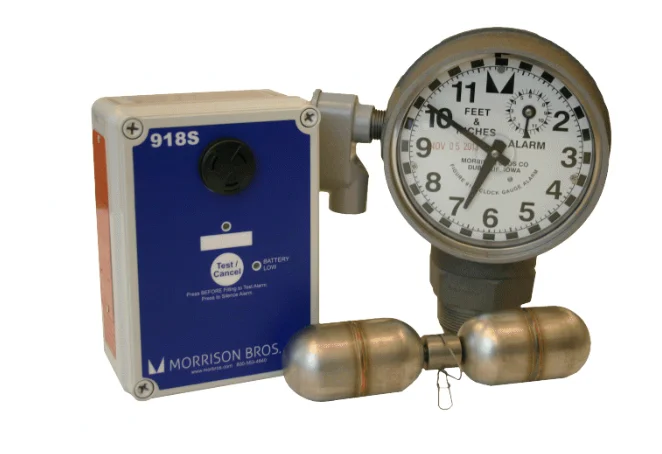
Morrison Bros. Model 918S
How It Works
Dual stainless steel floats inside the tank rise and fall with fuel level, connected via cable to the clock-style dial. The dial reads in feet and inches for precise level indication.
Key Features
Easy-to-read dial calibrated to tank dimensions
Stainless steel floats — no cork to deteriorate
Float-actuated mechanical design — no power required
Weatherproof enclosure for outdoor installation
Proven reliability across 1,000+ installations
Why We Specify This
After decades of experience, the Morrison Bros. clock gauge has proven extremely robust and dependable. Electronic ATG systems are available but add significant cost for conduit and remote annunciators.
High Level Alarm
Intrinsically Safe Overfill Warning
How It Works
The high level alarm activates at approximately 90% tank capacity during fuel delivery, providing an audible alert to the delivery driver before the mechanical overfill prevention valve engages.
Key Features
Activates at ~90% tank capacity
Audible alarm alerts delivery driver
Battery-operated — intrinsically safe
Test/Cancel button for verification
Low battery indicator
Compliance Note
NFPA 30 and NFPA 30A require high level alarms on aboveground storage tanks to alert operators during filling operations.
Interstitial Leak Indicator
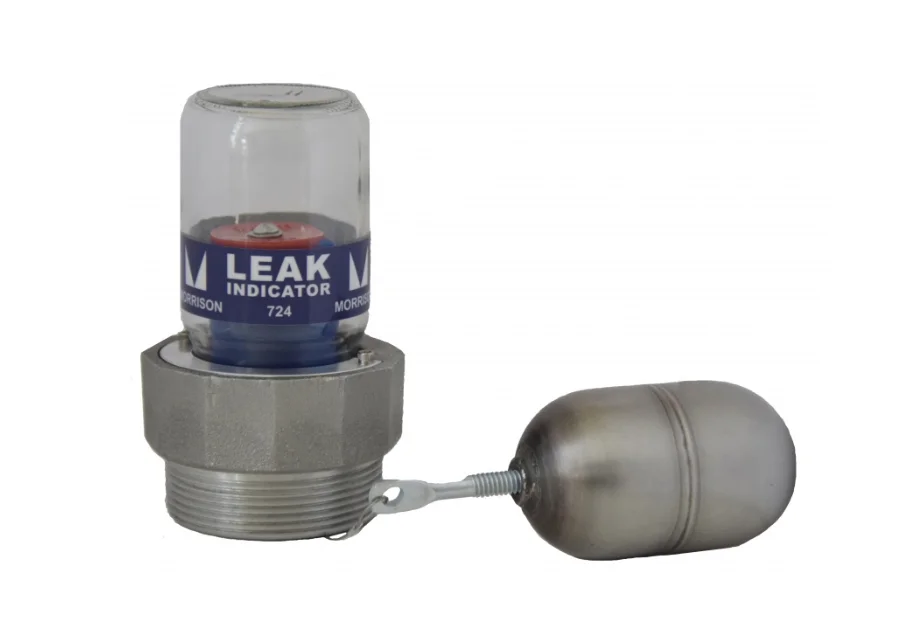
Morrison Bros. Model 724
How It Works
The interstitial space between tank walls is maintained at a slight vacuum or pressure. The gauge continuously monitors this space — any change indicates a potential leak in either the primary or secondary tank wall.
Key Features
Visual gauge indicates interstitial pressure
Detects leaks in either tank wall
No power required — mechanical operation
Continuous monitoring — check at a glance
Alarm contacts available for remote monitoring
Early Detection
Interstitial monitoring provides early leak detection before product escapes secondary containment, allowing repairs before environmental impact occurs.
Overfill Prevention Valve
Mechanical Float-Actuated Protection
How It Works
Installed inside the tank on the fill line, the overfill prevention valve uses a float mechanism to restrict flow when fuel reaches 90% capacity. At 95% capacity, the valve closes completely.
Key Features
Two-stage operation (restrict at 90%, shut off at 95%)
Float-actuated mechanical design
No power required — fail-safe operation
Works regardless of operator attention
Why This Matters
Prior to mechanical overfill prevention, overfills were the #1 source of spills from aboveground tanks. These valves enabled double-wall tanks to replace diked containment areas.
Submersible Turbine Pump
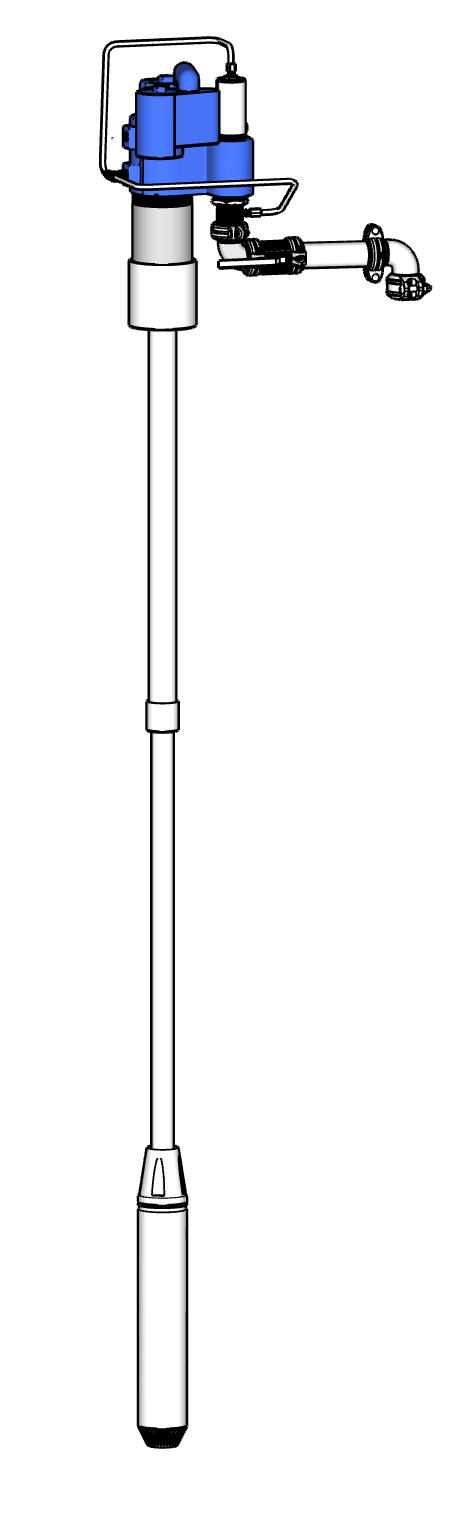
Franklin Fueling FE Petro®
How It Works
The FE Petro submersible turbine pump sits at the bottom of the tank, fully submerged in fuel. The multi-stage centrifugal pump pushes fuel up through discharge piping to the dispenser.
Key Features
Self-priming design eliminates priming issues
Intake screen filters debris
Check valve prevents backflow
Siphon stop prevents tank drainage
Available in 18-200 GPM flow rates
Standard Flow Rates
Gasoline: 10-12 GPM | Diesel Standard: 25-28 GPM | Diesel High Flow: 35 GPM | Fast Fuel: up to 150 GPM
Commercial Dispenser
Heavy-Duty Fleet Fueling Cabinet
Overview
Weather-resistant steel cabinet with all required fueling components pre-installed. Designed for high-volume commercial fleet operations.
Included Components
Weather-resistant steel cabinet
Mechanical register or electronic meter
Automatic shutoff nozzle
Swivel hose connections
Breakaway fitting (protects from drive-offs)
20' hose standard
Fuel Management
All dispensers include pulsers for integration with card-lock fuel management systems. Track fuel usage by driver, vehicle, and odometer reading.
Emergency Shear Valve
Dual Poppet Impact Protection
How It Works
Installed at the base of the dispenser, the emergency shear valve is designed to shear cleanly if a vehicle strikes the dispenser. Dual poppets immediately seal both supply and return lines.
Key Features
Installed at base of dispenser
Designed to shear cleanly on impact
Dual poppets seal supply and return lines
Stops fuel flow immediately
Fusible link option for fire conditions
Compliance Note
NFPA 30A requires emergency shear valves at dispensers to prevent fuel spills if the dispenser is struck by a vehicle.
Site Manager Control Panel
Pre-Wired Electrical Control System
Overview
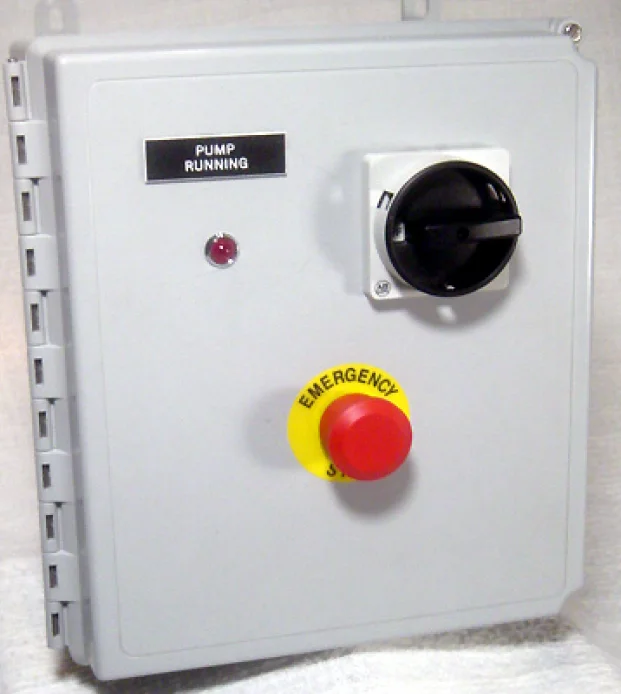
Every Fleet Fueling SmartTank ships with the Site Manager panel pre-wired to all tank equipment. Your electrician simply connects incoming power and runs conduit per our custom stub-up drawings.
Included Components
Motor starter for submersible pump
Complete electrical sub-panel
Service disconnects (code-compliant)
Emergency stop button (highly visible)
Pump running indicator light
Remote mount: 20-100 ft from dispensing area
Pre-Wired Advantage
Pre-wiring eliminates field wiring errors and reduces installation time. Custom conduit stub-up drawings show your electrician exactly where to bring power.
Fleet Fueling SmartTank
Complete Above-Ground Refueling Systems
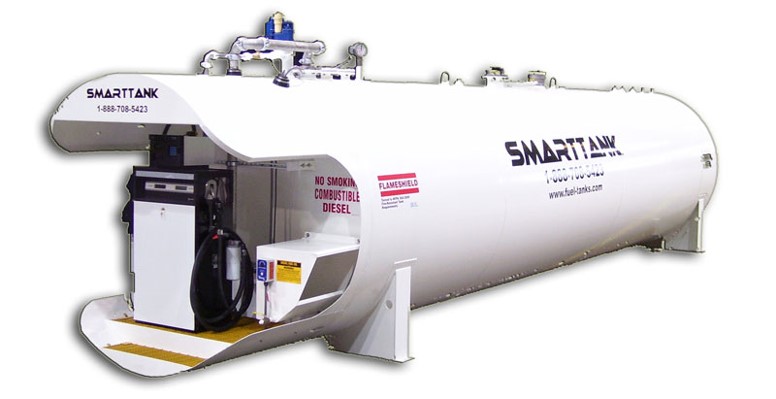
The Fleet Fueling SmartTank is a turnkey refueling station designed for commercial fleets, municipal operations, construction yards, and high-volume applications. Unlike piecing together components from multiple vendors, every SmartTank arrives as a complete, pre-wired system ready for installation — from the UL-certified tank to the dispenser, pump, canopy, and electrical controls.
Available in capacities from 4,000 to 20,000 gallons, these systems eliminate trips to off-site fuel stations, reduce fuel theft with card-lock accountability, and provide wholesale fuel pricing. Most customers see payback within 2-3 years from labor savings alone.
UL 2085 Fireguard®Pre-Wired SystemSite Manager PanelCustom Site DrawingsNEC Compliant2-Hour Fire Rating4,000 - 20,000 Gallons
What's Included: Standard Equipment
Every Fleet Fueling SmartTank includes these components as standard. Click highlighted items for detailed specifications and technical information.
Tank Construction
UL 2085 Fireguard® or UL 142 Flameshield®
Double-wall steel with secondary containment
Sandblasted to SSPC-SP 6 (surface prep)
White urethane paint finish
Stainless steel bushings and plugs
End rung ladder (standard)
Emergency vents (fire protection)
NFPA 704 safety decals
Level & Leak Detection
Mechanical clock gauge
Calibrated gauge stick
Intrinsically safe high level alarm
Mechanical leak detection gauge
Overfill prevention valve
Atmospheric vent
Fill System
Low mount fill container
Cam lock fill adaptor
Check valve (backflow prevention)
Fire-rated API 607 ball valve
Locking drain valve
Fill port sign with code info
Pump System
Submersible turbine pump
Fire-rated ball valves
Siphon prevention system
Stainless steel piping
25-35 GPM standard flow
Dispenser Equipment
Commercial dispenser with cabinet
Mechanical register (standard)
Fuel management ready (pulsers)
Automatic shutoff nozzle
Swivels & breakaway fitting
20' hose (standard)
Dual poppet emergency shear valve
Electrical & Controls
Site Manager control panel
Pre-wired complete system
Motor starter & sub-panel
Service disconnects
Emergency stop button
Custom conduit stub-up drawings
Complete electrical drawings
Installation instructions
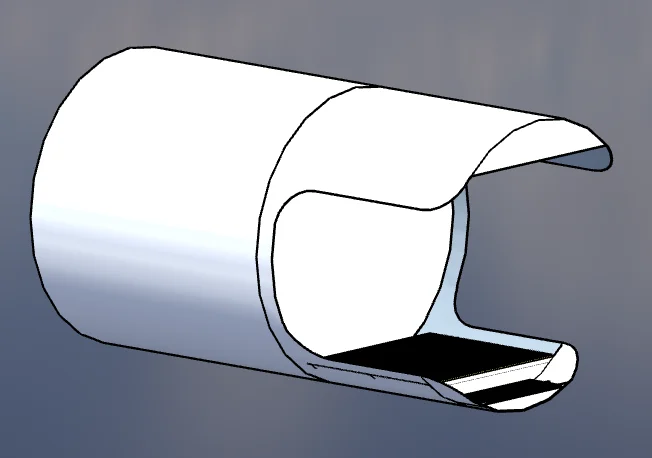
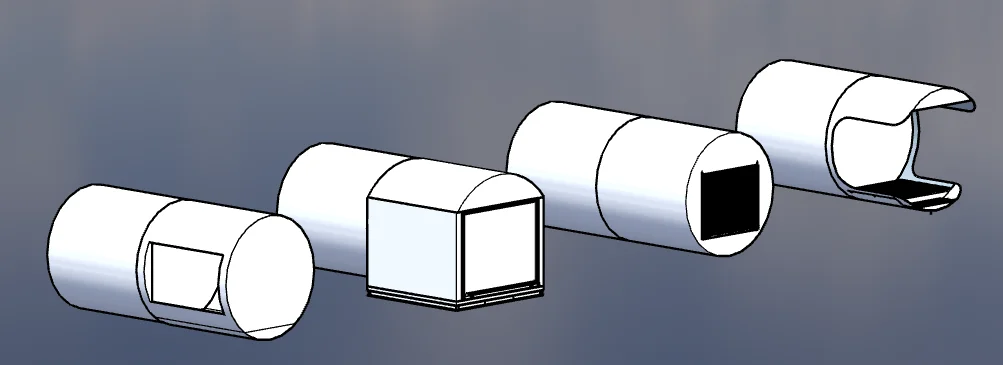
Canopy & Platform: Fleet Fueling systems include a protective canopy with integrated platform. Our unique design is superior to others that have copied us — the canopy is larger than the platform so rain isn't dumped into the dispenser containment, the platform isn't hidden under the snow waiting for a shin, and the rounded corners aren't going to give you stitches.
Other options are available to meet specific needs.
Return on Investment Calculator
Calculate how quickly a SmartTank system pays for itself. The time savings alone often justify the investment.
Your Fleet Information
Total gallons your fleet uses per month
Include benefits, taxes, vehicle costs
Drive time + waiting + fueling + maybe grabbing donuts...
Industry average 5-15%. NYC Police saw 25% reduction after adding card lock.
Your Savings
ESTIMATED PAYBACK PERIOD
2.1 Years
Monthly Savings
$6,458
Annual Savings
$77,500
Savings Breakdown
Time Savings (per gallon)$0.25
Wholesale Fuel Savings (per gallon)$0.10
Theft/Misuse Prevention (monthly)$1,050
Monthly Time Saved (hours)53 hrs
Monthly Labor Cost Savings$1,867
The Hidden Costs: Every trip to the gas station costs you more than fuel. Your employees are standing in line, chatting with buddies, grabbing snacks — while you're paying them $35+/hour. On-site fueling eliminates this waste entirely.
Fuel Theft is Real: In the early 1980s, the NYC Police Department saw a 25% reduction in fuel consumption after adding a card lock fuel management system to their facilities. Card lock systems with driver ID and odometer entry provide accountability that eliminates theft and unauthorized use.
*Based on average installed cost of $160,000 for a 12,000 gallon UL 2085 system. Actual costs vary by configuration and location.
Tank Construction Options
Click here for detailed comparison of tank construction types.
UL 2085 Fireguard®
Protected Aboveground Tank - STI Licensed
2-hour fire rating at 2,000°F
Lightweight thermal insulation between walls
Ballistics and impact resistance tested
Required by most jurisdictions
Budget: Plan for UL 2085 pricing
Budgeting Tip: Most jurisdictions now require UL 2085 tanks. For accurate budgeting, assume UL 2085 will be required unless your AHJ confirms otherwise.
UL 142 Flameshield®
Secondary Containment Tank - STI Licensed
Double-wall steel construction
Passes 2-hour fire test (non-insulated)
Emergency vents prevent failure
$1.50-2.00/gallon less than UL 2085
Requires AHJ approval
Important: UL 142 tanks require approval by Authority Having Jurisdiction (AHJ). We're happy to consult with your AHJ on your behalf.
Our Position on UL 142 Safety
Tens of thousands of UL 142 tanks have been manufactured and installed since the standard was established in the 1960s. To our knowledge, not a single properly-equipped UL 142 tank with emergency vents has failed due to fire exposure. Tanks that have failed during fire exposure did not have emergency vents installed.
In our opinion, UL 142 tanks with emergency vents offer sufficient protection. However, manufacturers that only produce UL 2085 tanks have successfully lobbied code authorities to require the higher standard. Most fire codes allow the AHJ to consider alternative protection from exposures, and knowledgeable officials may approve UL 142 tanks based on site-specific conditions.
Designed for Full Code Compliance
All SmartTank systems are designed and manufactured to meet or exceed national codes and standards:
UL 2085
Protected AST
UL 142
Steel AST
NFPA 30
Flammable Liquids
NFPA 30A
Motor Fuel Dispensing
NFPA 37
Stationary Engines
PEI RP200
AST Installation
IFC / NEC
Fire & Electrical
Site Manager Control Panel
Every Fleet Fueling SmartTank comes pre-wired with our Site Manager control panel, designed for remote mounting 20-100 feet from the dispensing area per NEC requirements.
Motor Starter: Integrated motor control for submersible pump
Sub Panel: Complete electrical distribution
Service Disconnects: Code-compliant isolation switches
Emergency Stop Button: Highly visible E-stop
Pump Running Indicator: LED status light
Remote Mount: Installed 20-100 ft from dispensing area
Installation Gallery
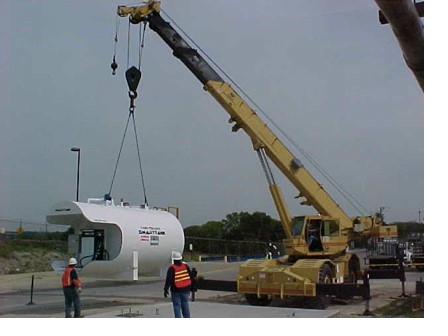
Tank Delivery & Placement
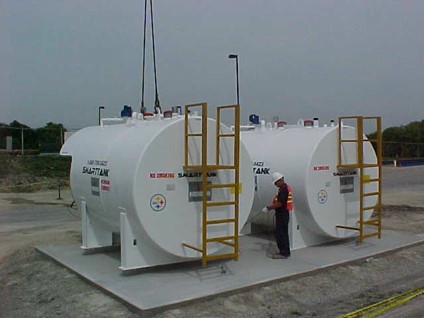
Dual Tank Fleet Installation
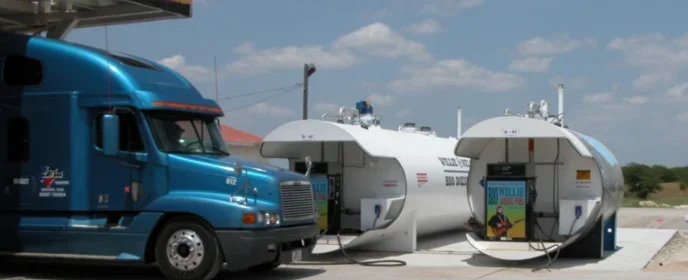
Fleet Truck Fueling
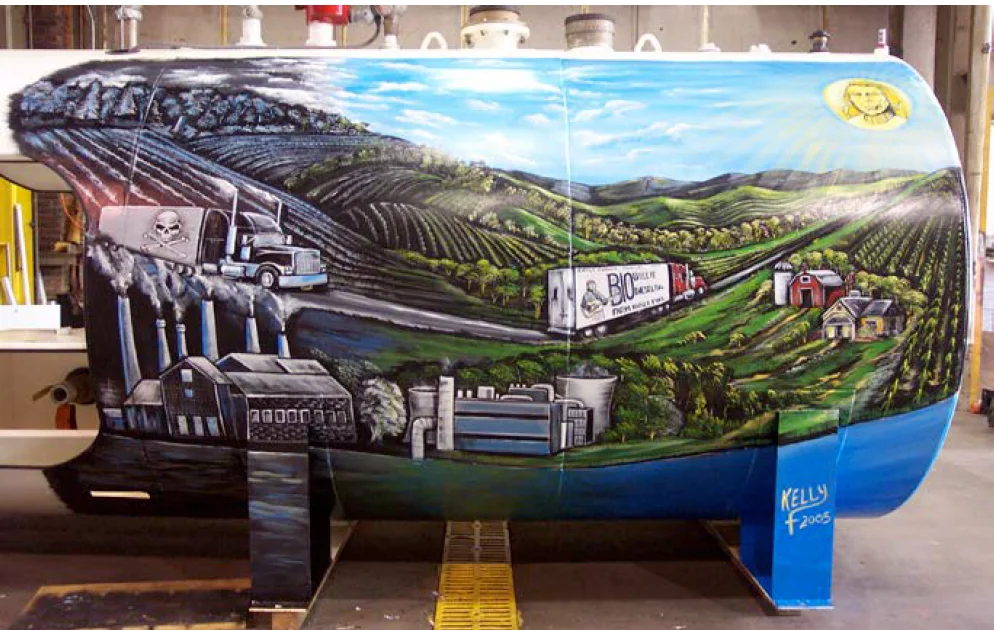
Custom Graphics & Branding
UL 2085 Fireguard® Tank Specifications
Important: Tank dimensions are subject to change. Always rely on project-specific approved construction drawings provided by SmartTank for final dimensions.
Note: Dimensions shown are for tank only. Canopy/platform adds approximately 6' to overall tank length. End rung ladder not included in dimensions. Fleet Fueling systems with canopy/platform are available starting at 4,000 gallon (96" diameter) tanks.
Calibrated in ¼" increments for manual tank gauging with gauge stick. Print on 8.5" × 11" paper (landscape orientation recommended).
AHJ Approval Required: UL 142 tanks require approval by the Authority Having Jurisdiction in most areas. Contact SmartTank for assistance consulting with your AHJ.
UL 142 Flameshield® Tank Specifications
Important: Tank dimensions are subject to change. Always rely on project-specific approved construction drawings.
Note: Dimensions shown are for tank only. Canopy/platform adds approximately 6' to overall tank length. End rung ladder not included in dimensions.
Our concierge-level project management service handles every aspect of your installation. We serve as General Contractor to coordinate all site work.
1
Engineering
Work with engineers for permitting
2
Bid Solicitation
Competitive bids from contractors
3
Site Work
Coordinate concrete, crane, electrical
4
Installation
Complete installation & commissioning
Configure Your Fleet Fueling SmartTank
3D CONFIGURATOR
Custom 3D configurator coming soon
1. Tank Type
2. Tank Size
Recommended: 12,000 Gallon — Large enough to receive a full tanker load (7,000-8,000 gallons). Working capacity is approximately 90% of nominal due to overfill prevention and thermal expansion requirements.
Important: Never run the tank empty. Running low introduces water and particulate into the system and can damage the submersible pump motor (located 6" off the bottom). Maintain minimum 10-15% fuel level.
3. Tank Configuration & Fuel Type
Select fuel type:
4. Dispenser & Canopy
5. Flow Rate
6. Optional Equipment
Secondary Containment Note: Dual wall tanks are inherently self-contained with 100% secondary containment built in. Tertiary containment (dikes/berms) is typically not required. Containment dikes create maintenance issues including potential saddle corrosion from standing water, and drain valves that are often left open or become clogged with debris.
Your Configuration
Tank Type:UL 2085
Size:4,000 Gal
Config:Single
Fuel:Diesel
Dispenser:Single
Canopy:Single
Flow:25-28 GPM
Options:None
Standard: Pre-wired, Site Manager, site drawings, clock gauge, high level alarm, leak detection, submersible pump, siphon stop, mechanical register, auto nozzle, swivels, breakaway, shear valve, 20' hose, end ladder, urethane finish, SS fittings